 111
111 2
2 3
3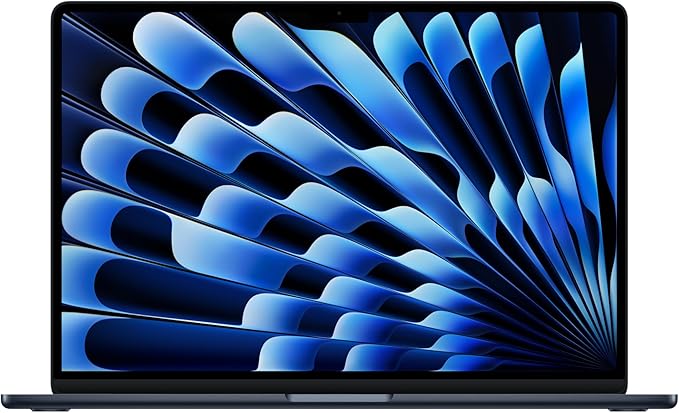
The Apple 2026 MacBook Air 15-inch with the M5 chip represents the latest evolution of Apple’s ultra-portable laptop lineup. Combining a spacious 15.3-inch Liquid Retina display, next-generation Apple Silicon, 16GB of unified memory, a 512GB SSD, and support for modern wireless technologies like Wi-Fi 7, this model is designed for users who need a balance of performance, efficiency, and mobility.
Built with Apple’s newest M5 processor, the laptop is engineered to support modern AI-powered workflows while maintaining the exceptional battery efficiency that the MacBook Air series is known for. Whether you’re working with productivity applications, creative software, programming environments, online collaboration tools, or AI-assisted features integrated into macOS, the hardware is designed to deliver responsive everyday performance.
This guide explores the specifications, design, display, performance, memory architecture, AI capabilities, battery life, connectivity, camera system, security features, and ideal use cases of the Apple 2026 MacBook Air 15-inch.
| Specification | Details |
|---|---|
| Display | 15.3-inch Liquid Retina Display |
| Processor | Apple M5 Chip |
| Memory | 16GB Unified Memory |
| Storage | 512GB SSD |
| Camera | 12MP Center Stage Camera |
| Wireless | Wi-Fi 7 |
| Security | Touch ID |
| Color | Midnight |
| Operating System | macOS |
| Form Factor | Ultra-thin Laptop |
At the center of the 2026 MacBook Air is Apple’s M5 chip, representing another step forward in Apple’s custom silicon architecture.
Apple Silicon combines multiple processing components into a single System-on-a-Chip (SoC), including:
This integrated design reduces communication latency between components while improving overall efficiency compared with traditional multi-chip architectures.
The M5 chip continues Apple’s focus on delivering high performance while minimizing power consumption, allowing users to perform demanding workloads without requiring bulky cooling systems.
Artificial intelligence is becoming increasingly integrated into everyday computing.
The MacBook Air with the M5 chip is designed to support modern AI-powered experiences across compatible applications and operating system features.
Potential AI-assisted workflows include:
Many AI tasks benefit from Apple’s Neural Engine, which accelerates machine learning operations directly on the device.
On-device processing can also reduce latency while keeping supported data local rather than relying entirely on cloud-based computation.
One of the defining features of this MacBook Air is its spacious 15.3-inch Liquid Retina display.
The larger screen provides additional workspace for:
Liquid Retina technology offers:
For professionals who regularly work with visual content, the display delivers detailed image quality suitable for photography, design, presentations, and media consumption.
Instead of separating system memory and graphics memory, Apple uses a Unified Memory Architecture.
This 2026 MacBook Air includes:
16GB Unified Memory
Unified memory allows the CPU, GPU, and Neural Engine to access the same memory pool.
Benefits include:
Sixteen gigabytes provides comfortable headroom for users who regularly switch between multiple applications or work with larger files.
The integrated 512GB SSD offers fast storage for applications, files, and operating system data.
Solid-state storage improves:
For many users, 512GB offers sufficient capacity for documents, creative projects, photos, productivity software, and moderate media libraries.
Cloud storage services can also complement local storage for larger archives and backups.
The MacBook Air family is known for combining portability with premium construction.
Despite its larger 15-inch display, the laptop maintains a slim profile suitable for:
The aluminum enclosure contributes to durability while maintaining a clean and minimalist appearance.
The Midnight finish gives the laptop a modern and understated aesthetic that complements both professional and personal environments.
Unlike many high-performance laptops that require active cooling, the MacBook Air emphasizes efficient operation.
Apple Silicon’s power efficiency allows the system to remain quiet during many everyday tasks.
This approach benefits users working in environments where minimal noise is desirable, including:
Video communication has become an essential part of modern work and education.
The integrated 12MP Center Stage camera enhances video conferencing by offering higher image quality compared with previous generations.
Center Stage technology is designed to keep participants better framed during supported video calls.
Applications may include:
Combined with Apple’s image processing technologies, the camera aims to produce clearer video across a variety of lighting conditions.
Security and convenience are integrated through Touch ID.
Instead of repeatedly entering passwords, users can authenticate using their fingerprint.
Touch ID supports tasks such as:
Fingerprint authentication provides a fast and secure login experience while reducing dependence on traditional passwords.
The inclusion of Wi-Fi 7 prepares the MacBook Air for newer wireless networking standards.
Potential advantages include:
Actual speeds depend on internet service, compatible routers, and local network conditions.
Apple Silicon has consistently focused on maximizing battery life through efficient hardware integration.
The M5 chip continues this philosophy by balancing performance with lower energy consumption.
Long battery life benefits users who frequently work away from power outlets, including:
Battery duration varies depending on workload, display brightness, software usage, and system settings.
The MacBook Air is suitable for a broad range of everyday productivity tasks.
Common workflows include:
The combination of the M5 processor and unified memory allows users to keep multiple applications open simultaneously without frequent slowdowns during typical workloads.
Creative professionals often require systems capable of handling visual content efficiently.
Depending on project complexity, the MacBook Air can support workflows involving:
Apple’s media engines help accelerate supported media formats while maintaining energy efficiency.
Developers can benefit from Apple’s optimized ecosystem.
Typical development tasks include:
Apple Silicon has become widely supported across modern development tools and frameworks.
The larger display paired with 16GB of unified memory enhances multitasking.
Users can comfortably arrange multiple windows, such as:
This layout reduces frequent window switching and improves workflow organization.
The MacBook Air ships with macOS, which is optimized specifically for Apple Silicon.
Key platform benefits include:
Users who also own other Apple devices may benefit from continuity features such as shared clipboard, AirDrop, Handoff, and synchronized messaging across compatible devices.
The MacBook Air is suitable for media consumption as well as content production.
The larger display and integrated speakers support activities including:
Combined with the Liquid Retina display, multimedia content appears detailed and vibrant.
Although the display measures 15.3 inches, the MacBook Air remains considerably more portable than many traditional performance laptops.
Its lightweight design makes it practical for:
This combination of screen size and mobility is one of the defining characteristics of the MacBook Air lineup.
The Apple 2026 MacBook Air 15-inch is suitable for a variety of users, including:
Its hardware configuration is designed to balance portability with sufficient performance for modern computing needs.
Some of the standout characteristics include:
The Apple 2026 MacBook Air 15-inch with the M5 chip continues Apple’s focus on combining portability, efficiency, and modern computing capabilities in a lightweight notebook. Its large Liquid Retina display, 16GB unified memory, 512GB SSD, and integrated AI-focused hardware provide a versatile platform for productivity, creative work, education, and everyday computing.
By integrating Apple’s latest silicon architecture with advanced wireless connectivity, a high-resolution camera, Touch ID security, and a spacious display, the MacBook Air is designed to support a wide range of workflows while maintaining the thin, lightweight profile that defines the Air family. Rather than targeting a single type of user, this configuration offers a balanced feature set suited to students, professionals, creators, and anyone seeking a modern macOS laptop with efficient performance and support for contemporary AI-enhanced applications.